

Propane Furnaces
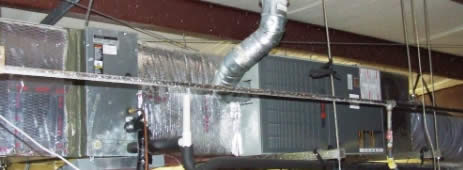
Homes and buildings equipped with central heating systems or fixed furnaces are uniquely fitted to the building or home being serviced. Furnaces are designed by HVAC mechanical engineers and are installed by licensed air conditioning and heating contractors according to manufacturers specifications. Propane furnaces typically are not sold by or installed by propane companies due to their size and design. However, some propane companies will work on these furnaces provided manufacturer approval and certification is attained by the gas company. As always, furnace repair and service is to be performed according to manufacturers specifications.
Propane Gas Furnaces Overview
Propane gas furnaces are available in many different models with varying capacities for entire home heating or for individual area heating such as a self contained propane wall furnace. Furnaces function by taking air (usually from inside), heating it and returning it to the inside through an air duct system which warms the house or building. The flue gases produced from combustion are removed from the furnace through exhaust ventilation. This is extremely important to understand because the products of combustion (flue gases) are extremely high in concentration and can cause property damage and present a health hazard if ventilation is not installed or is installed incorrectly. In fact, furnace manufacturers supply a supplemental exhaust ventilation manual in addition to the furnace information manual.
Unlike space heaters, propane furnaces have complex mechanical parts in addition to the heating elements. These mechanisms function in unison with the propane heat generating equipment to provide adequate warmth when in use. Most central propane furnaces incorporate air conditioning and cooling systems in a single self contained unit and are operated with an adjustable thermostat in a remote location, usually mounted on a wall. Gas furnaces use either a standing pilot flame or electronic spark for ignition. Most newer model gas furnaces today use electronic ignition to light furnace burners.
LP Gas Furnace Installation, Service and Repair
The installation of any permanently mounted fixed heating system shall be handled by and HVAC professional only. Although some propane companies have furnace installation capabilities, they generally do not perform this type of work and will recommend an HVAC contractor who can properly size and install fixed propane heating systems. Regulations for the installation and operation of propane furnaces involve code requirements at many levels and because HVAC personnel are familiar with these codes as they change, HVAC technicians should be consulted prior to gas furnace installation.
Consumers can do several things to ensure that their gas furnace functions efficiently and safely. These simple checks are not technical and can keep the furnace and air conditioner in good working order as well as keeping their family and home safe.
- Furnace Flame - Propane furnace burner flames should be blue in color. If orange or yellow flames are visible during operation, the furnace needs adjustment.
- Flammable Vapors - Do not store any combustible material or liquid that produces flammable vapors near a furnace. Gas furnaces installed in confined spaces are extremely susceptible to gathering vapors if they are placed adjacent to a gas furnace.
- Air Filters - Dirty and clogged air filters can restrict the flow of air to and through the furnace. It is recommended that filters be replaced monthly or sooner if needed.
- Return Air Registers - Many return air registers can be blocked by furniture or curtains that will cause the furnace to be starved for air. Without the proper amount of return air, a furnace will have difficulty circulating heated air throughout the building.
Prior to contacting your propane company concerning furnace repair and service, refer to the furnace documentation for manufacturers contact information. LP Gas furnace manufacturers are often able to troubleshoot problems over the phone and can provide appropriate instructions. This will save you the cost of a service call if the propane company ends up referring you to an HVAC contractor.
Propane Furnace Combustion and Ventilation
LP Gas furnaces should always draw air for combustion from outside the living area of a structure. Air should be drawn from the attic or from outside the home. This is entirely for safety and for the prevention of carbon monoxide poisoning within the living space of a home. For example, if the products of combustion are not being properly vented to the outside atmosphere through exhaust venting, the backup of flue gases could potentially enter the living area if air from the living area is being used to supply air for combustion. Conversely, if combustion supply air is being drawn into the propane furnace from the outside, a flue gas backup will be routed back to the outside as opposed to the living space of a home.